On Wednesday, the qualifiers were announced for the 2022-23 Heineken Champions Cup and EPCR Challenge Cup, the two premier club competitions in European rugby union.
Growing up as a player and fan of southern egg-chasing, a proud season ticket holder of my local Premiership team, such an announcement would once have been big news. Nowadays, a brief stumbling across the social media post announcing the teams proved no more than a reminder of why I fell out of love with the sport.
First of all, qualifiers is a bit of a misnomer, as simply existing in the top three European leagues is enough to get you a spot in one of the two tournaments. Every team in the French Top 14, the thirteen from the English Premiership (why thirteen, by the way?) and all participants in the United Rugby Championship (the non-entity of a name for what ex-fans like myself will still call the Magners/Celtic League), but all of that is nothing new.
What has changed over the years, however, are the chances of earning yourself a place if you happen to hail from a more minor league on the continent, which now stand at absolutely zero. It used to be commonplace to see at least one or two sides from the likes of Spain, Romania, Georgia or Russia getting the chance to test themselves against the big boys (okay, the biggish boys) in the Challenge Cup, allowing for the club game to grow outside of the elite 6 Nations.
But then, for 2020-21, the formats were changed to something resembling the new UEFA Champions League structure and, for no reason – at least no reason was given in the ECPR’s official announcement – there would no longer be any places awarded to teams outside the big three leagues, and no qualifying tournament. The upper-class had ring-fenced themselves and the well-supported, well-organised underdogs were dumped on the scrapheap without a second thought.
Is it hardly surprising, though? This from the sport which would rather not give Georgia a seat (or even a chance of earning a seat) at the top table of European international competition, because there’s more money to be earnt from biennial weekend breaks in Rome than in Tbilisi. If that’s not the reason, then it’s certainly not Italy’s on-field performances that are retaining their 6 Nations spot; the rugger crowd lost their minds when plucky little Italy beat Wales in a dead rubber in this year’s event, ending over half a decade of trouncing after trouncing from all comers. That outpouring of joy shows how far they had fallen, as ten or so years ago wins over Wales and Scotland were becoming the norm, almost expected. They beat France and Ireland too. Forgive me for not shedding a tear for one win since 2015.
To add insult to injury, as it turns out, European is also a misnomer from this season onwards, as – having joined the URC last season – four South African sides who were once Super Rugby franchises; the Bulls, Lions, Sharks and Stormers, are now eligible to take part, squeezing out any hopes “tier two” clubs had of getting a look in. South African teams the Cheetahs and Southern Kings were brief members of the Pro14 (what is now the URC, apologies if this is getting confusing) a few seasons ago, but never intruded upon the two pan-European competitions. They were of course the two franchises who lost their Super Rugby licences and had to look elsewhere, whereas these new four are big-hitters, quickly welcomed into a new home after Super Rugby trimmed down to a trans-Tasman league, mainly due to the effects of Covid-19, but quite frankly the bloated tournament spanning four continents had massively overreached itself – not something that the URC seem to have taken not of.
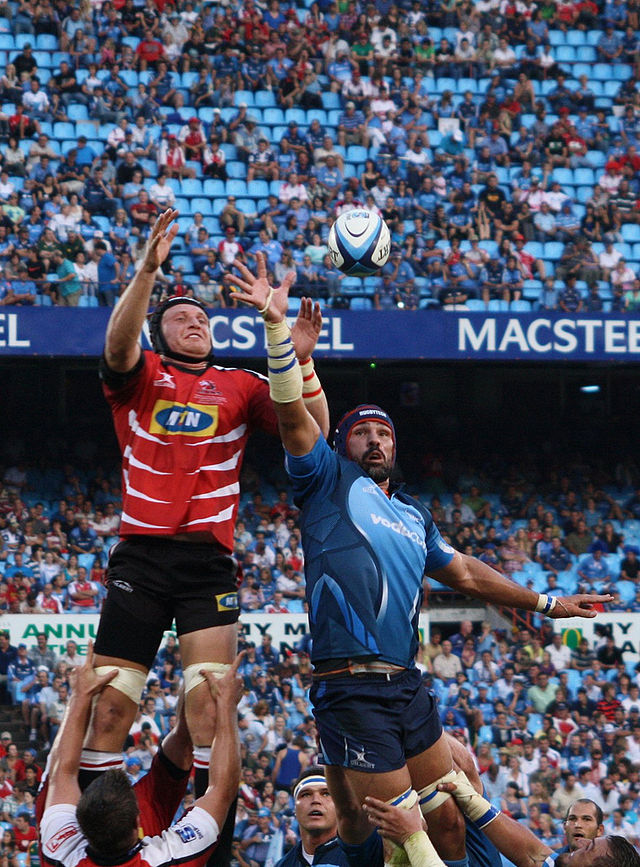
Thanks to their top half finishes in their maiden URC campaigns, the Bulls, Sharks and Stormers will all be in the Heineken Champions Cup, joining Munster, Leinster, Ulster, Ospreys and Edinburgh as the qualifiers from the dual-hemisphere league.
That’s right, South Africa will be the joint-third best represented nation in the 24-team top tier European competition. Wales and Scotland will have one team each, and Italy none. How that is good for the European game is beyond me. All four Welsh sides finished in the bottom half of the URC, but Ospreys won the Welsh Shield which got them a place. The current structure of Welsh rugby is a contentious issue at the moment, with many suggesting the provincial system has failed. It’s a subject for another time but I, for one, agree and would favour a return to the club system, not just in Wales but in Ireland, Scotland and Italy too. But, you see, there’s more money to be made with provinces and franchises, so…
Down to the Challenge Cup then, where we have our remaining six Top 14 clubs, five Premiership and eight from the URC. Nineteen teams, for a twenty team competition, so who gets that final place?
Have a guess. We already know it’s not going to be a qualifier from around Europe, not when meritocracy and expansion are two words that seldom exist in the rugby union dictionary. Is it the champions of the English Championship? The relegated team from the Top 14, the Italian League champions? All worthy guesses, but no.
They have invited the Cheetahs. Those same Cheetahs from Bloemfontein, South Africa. Those same Cheetahs who participated in the Pro 14 from 2017 until 2020 when Covid prevented them from continuing and have since taken part in Super Rugby Unlocked (no, me neither) and the Currie Cup, South Africa’s traditional domestic competition.
The powers that be at the EPCR have decided that that franchise is the one more worthy of a place in the European Challenge Cup than any other club from across the continent. What sort of message does that send to players and fans from Georgia and Romania, when the federation they belong to overlooks them like that, with opportunities for development already scarce, simply because the market is larger and the chances of financial gain greater?
Elitist decisions like this turn once die-hard fans off rugby union entirely, I know because it happened to me, and unfortunately they are making it less likely to ever win me back.

 Anthony Tomas Sport