
The teams I support have never won anything or been truly successful, I often hope it stays that way
I met the announcement of this season’s EFL fixtures with next to no fanfare. A tenth-straight season in the same division for my club where we will be lucky to survive bore no great desire to discover in which order teams will be lining up to take three points. The only aspect I paid attention to was the break provided by the World Cup, a welcome distraction, not that my national team qualified, but then they haven’t done so for twenty years, so I’m well-used to enjoying the party despite their traditional RSVP “no”.
None of the above should be much of a surprise, for my club has never won a major trophy, nor even made a final, and they have spent a whole three seasons in the top flight. For my national team, the last eight of a tournament has been the limit. Before you reach for the tiny violins, though, I have at least seen all three top flight escapades and seen my country in a couple of knockout stage matches, which is more than many can say.
Perhaps, that is not enough “success” to deter you from a quick screech of the fiddle. Success, in any walk of life, is difficult enough to gauge and in footballing terms it is nigh on impossible. One fan’s success is another’s failure. It depends largely on your own side’s achievements; you might only be able to dream of three seasons in your respective top tier, or you might be reading this barely aware that other tiers exist, questioning why one would even bother spending time and money on such a dismal prospect.
One thing about our team’s successes does seem to be clear – to me at least; what happens when a team’s period of success comes to an end, or even gives the merest hint that the best has already come and gone, and how that warps our beliefs and expectations. Let me tell you, it’s not pleasant.
In the recent international break, England’s recent results were a little below expectations. As someone born and raised in England, but not an England fan, I try not to get caught up in the circus constantly surrounding The Three Lions, but recently my avoidance tactics failed me once attentions turned towards the termination of the tenure of Gareth Southgate.
While half of those offering their two cents were clamouring for the likes of Graham Potter of Graham Potter’s Brighton and using phrases like “tactically inept” to describe the incumbent, the other half chorused something along the lines of, “What? Sack the very same Gareth Southgate who took the team to a joint-best World Cup finish on foreign soil, then a maiden European Championship final? You’re joking!”
I counted myself among the latter. Interestingly, using friends and fellow fans I’m in WhatsApp etc. groups with for my survey, I noticed a correlation with few anomalies; fans of clubs from England’s “top six” generally wanted Southgate out, while supporters of those from outside the hallowed half dozen were happy for his previous record to keep him in the hot seat until after Qatar, at least.
While those findings aren’t quite worthy of being presented to the Office for National Statistics, they showed that if success for you is rare, the more likely you are to be patient when mediocrity is restored, but when used to lifting silverware at the top table, any suggestion that the brandy and cigars are running out calls for an ejector seat. England may not have recent silverware, but it is his own success that Southgate is now being judged harshly against, despite achieving far more than the supposed great gaffers that came before him.
It’s at times like these that I am forever grateful I don’t support a so-called big club, because it appears that being a fan of one creates only two possible states of mind: the normality of winning, or the despair of not winning quite so regularly. While winning (so I’m told) never gets boring, both states seem at odds with why we enjoy football. Support my team on the other hand and the culture of low expectations means any win manifests joy and fosters hope of what is to come, even if very little is to come, the chance to dream is – in my mind – much more intrinsically linked with why we turn up every Saturday. No success – it’s much more fun.
I remember when this idea really resonated with me. In October 2010, after one win in their first eight league matches under Roy Hodgson, Liverpool found themselves 19th in the Premier League. A caller to a radio phone-in and fan of England’s most successful club, European champions just five years earlier, used his airtime to say that relegation for Liverpool should be welcomed, allowing for a complete overhaul of the club and a fresh start, because the team (still with a spine of Reina, Carragher, Gerrard and Torres) had “fallen so far”. Delusion alert. So unfamiliar was this poor little fan with bottom halves of tables, let alone relegation zones, that at the first sign of trouble – before the clocks went back – he wanted his club to go on some mythical great reset that he believed was the done thing in the Championship. Fellow fans texted in in agreement! Three matches later they were in the top half, they finished sixth, higher than they had twelve months earlier. But the damage was done, no matter how great Liverpool had been for decades, two months of poor form could not be stomached; the baby had to be thrown out with the bath water.
Fast forward three seasons to David Moyes’ time at Manchester United, where a colleague at the time said we should “give credit” to United fans for sticking with the club and not running off to support Chelsea and the like. My goodness, they remained faithful to a club who – after winning countless trophies – dropped a whole six places in the English football pyramid, and they managed not to jump ship to a direct rival! What incredible loyalty! I’m welling up! Let me tell this one to nearby Oldham and Macclesfield fans.
On the flipside, let’s take Leicester and Wigan. Does Leicester’s monumental title win in 2016 mean more to their fans than Manchester City’s triumph in May ever will? Does Wigan’s 2013 FA Cup success hold a greater place in their hearts than Liverpool’s two cup wins this season do in theirs? “Yes” are the answers. Case closed. Bask in the glory of one major trophy ever, or look at two trophies from a possible four in four months as somewhat of a failure? I’m with the Latics on this one, every time.
Leicester, however, are a great example of how this rot of success – now infesting the England discourse – can set in. Just a few months after their Foinavon-esque ascent, when the prospect of relegation looked possible, manager Claudio Ranieri was sacked. Twenty-four months prior, when relegation looked not possible but almost certain, Nigel Pearson was not treated so harshly by the no-trophies-for-twenty-something-years Foxes, allowing him to build the foundations of the title triumph under Ranieri. It may have, with hindsight, been the correct decision, but the bitterness of the move smacked of faux-elitism.
I take no umbridge with those lucky enough to have good reason to support one of the elites, through geography or family connection, etc. It is those for whom it really was a choice, let’s call them by name, Glory Hunters, that I’m taking aim at and, in a way, feel sorry for. Over the years, particularly during my formative ones but also later, I have often been asked why I don’t simply support Successful Team X or Y instead of my floundering local side. While I can forgive the youths for such a childish (it’s in the name, I suppose) question, being asked this by adults really does wrangle. What does it mean to “support”? Essentially, to give assistance to those who need it. This, on a micro level, is something I do when turning up to a relegation six-pointer, or paying a meaningful contribution to watch a local non-league team. Throwing this away to “support” mega-rich franchises by celebrating trophy lifts from the comfort of my sofa would be the equivalent of withdrawing your monthly donation to a charity tackling world poverty and instead cheering on a hedge fund manager doing a reading of the accounts over Zoom.
Do I dream of seeing my team in a cup final, or my nation reaching the last four of a major tournament? Of course I do, because of what great a deal they would mean to me. But, if neither ever happen, I will be perfectly content, never having to worry about the normalisation of success, or the hangover its termination induces. I will have enough purely from the hope that support brings, because if you have hope, you have everything… including success.
Author Archives: Anthony Tomas
The European rugby shop is closed – unless you’re South Africa’s Big Five
On Wednesday, the qualifiers were announced for the 2022-23 Heineken Champions Cup and EPCR Challenge Cup, the two premier club competitions in European rugby union.
Growing up as a player and fan of southern egg-chasing, a proud season ticket holder of my local Premiership team, such an announcement would once have been big news. Nowadays, a brief stumbling across the social media post announcing the teams proved no more than a reminder of why I fell out of love with the sport.
First of all, qualifiers is a bit of a misnomer, as simply existing in the top three European leagues is enough to get you a spot in one of the two tournaments. Every team in the French Top 14, the thirteen from the English Premiership (why thirteen, by the way?) and all participants in the United Rugby Championship (the non-entity of a name for what ex-fans like myself will still call the Magners/Celtic League), but all of that is nothing new.
What has changed over the years, however, are the chances of earning yourself a place if you happen to hail from a more minor league on the continent, which now stand at absolutely zero. It used to be commonplace to see at least one or two sides from the likes of Spain, Romania, Georgia or Russia getting the chance to test themselves against the big boys (okay, the biggish boys) in the Challenge Cup, allowing for the club game to grow outside of the elite 6 Nations.
But then, for 2020-21, the formats were changed to something resembling the new UEFA Champions League structure and, for no reason – at least no reason was given in the ECPR’s official announcement – there would no longer be any places awarded to teams outside the big three leagues, and no qualifying tournament. The upper-class had ring-fenced themselves and the well-supported, well-organised underdogs were dumped on the scrapheap without a second thought.
Is it hardly surprising, though? This from the sport which would rather not give Georgia a seat (or even a chance of earning a seat) at the top table of European international competition, because there’s more money to be earnt from biennial weekend breaks in Rome than in Tbilisi. If that’s not the reason, then it’s certainly not Italy’s on-field performances that are retaining their 6 Nations spot; the rugger crowd lost their minds when plucky little Italy beat Wales in a dead rubber in this year’s event, ending over half a decade of trouncing after trouncing from all comers. That outpouring of joy shows how far they had fallen, as ten or so years ago wins over Wales and Scotland were becoming the norm, almost expected. They beat France and Ireland too. Forgive me for not shedding a tear for one win since 2015.
To add insult to injury, as it turns out, European is also a misnomer from this season onwards, as – having joined the URC last season – four South African sides who were once Super Rugby franchises; the Bulls, Lions, Sharks and Stormers, are now eligible to take part, squeezing out any hopes “tier two” clubs had of getting a look in. South African teams the Cheetahs and Southern Kings were brief members of the Pro14 (what is now the URC, apologies if this is getting confusing) a few seasons ago, but never intruded upon the two pan-European competitions. They were of course the two franchises who lost their Super Rugby licences and had to look elsewhere, whereas these new four are big-hitters, quickly welcomed into a new home after Super Rugby trimmed down to a trans-Tasman league, mainly due to the effects of Covid-19, but quite frankly the bloated tournament spanning four continents had massively overreached itself – not something that the URC seem to have taken not of.
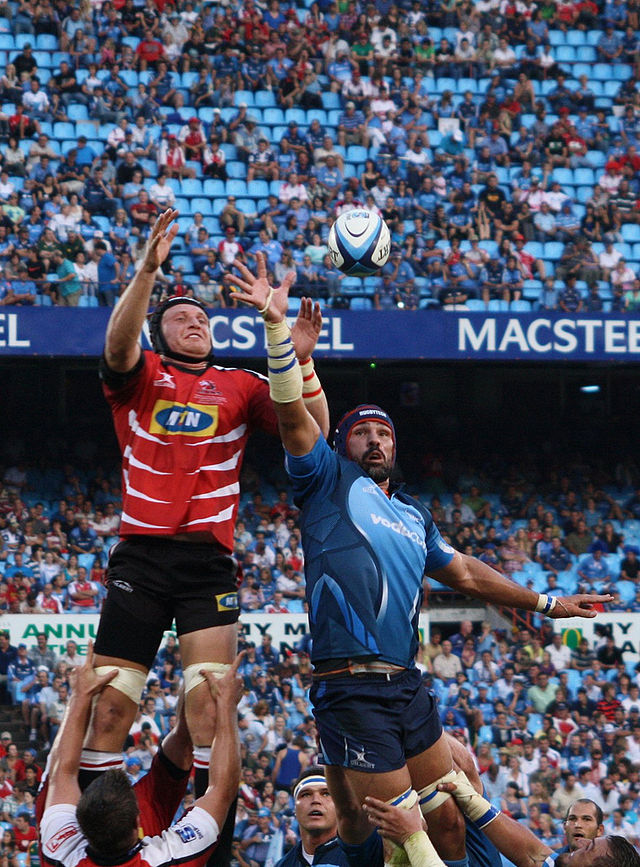
Thanks to their top half finishes in their maiden URC campaigns, the Bulls, Sharks and Stormers will all be in the Heineken Champions Cup, joining Munster, Leinster, Ulster, Ospreys and Edinburgh as the qualifiers from the dual-hemisphere league.
That’s right, South Africa will be the joint-third best represented nation in the 24-team top tier European competition. Wales and Scotland will have one team each, and Italy none. How that is good for the European game is beyond me. All four Welsh sides finished in the bottom half of the URC, but Ospreys won the Welsh Shield which got them a place. The current structure of Welsh rugby is a contentious issue at the moment, with many suggesting the provincial system has failed. It’s a subject for another time but I, for one, agree and would favour a return to the club system, not just in Wales but in Ireland, Scotland and Italy too. But, you see, there’s more money to be made with provinces and franchises, so…
Down to the Challenge Cup then, where we have our remaining six Top 14 clubs, five Premiership and eight from the URC. Nineteen teams, for a twenty team competition, so who gets that final place?
Have a guess. We already know it’s not going to be a qualifier from around Europe, not when meritocracy and expansion are two words that seldom exist in the rugby union dictionary. Is it the champions of the English Championship? The relegated team from the Top 14, the Italian League champions? All worthy guesses, but no.
They have invited the Cheetahs. Those same Cheetahs from Bloemfontein, South Africa. Those same Cheetahs who participated in the Pro 14 from 2017 until 2020 when Covid prevented them from continuing and have since taken part in Super Rugby Unlocked (no, me neither) and the Currie Cup, South Africa’s traditional domestic competition.
The powers that be at the EPCR have decided that that franchise is the one more worthy of a place in the European Challenge Cup than any other club from across the continent. What sort of message does that send to players and fans from Georgia and Romania, when the federation they belong to overlooks them like that, with opportunities for development already scarce, simply because the market is larger and the chances of financial gain greater?
Elitist decisions like this turn once die-hard fans off rugby union entirely, I know because it happened to me, and unfortunately they are making it less likely to ever win me back.
Who this neutral is excited to see at the World Cup
While there are endless negatives surrounding the 2022 FIFA World Cup which have been (rightly) covered and discussed, I – like the vast majority – am still looking forward to it, at least from a solely footballing perspective.
My national team has now gone twenty years without making it to the showpiece, so I am well-versed in being a neutral and picking out a handful of teams from around the globe which I can take a particular interest in when the tournament comes around, or at least am glad to see have qualified, for one reason or another.
So now that we have our thirty-two finalists, here are a few teams I’m looking forward to seeing at the 2022 FIFA World Cup*.
*Subject to so, so much change of the next few months!
Wales and Canada
Two very different sides but they make this list for the same main reason. Both will be making their second respective appearance at the finals, both after long droughts; Canada previously appeared in 1986 while Wales have been waiting since they were knocked out in the 1958 quarter-finals by Brazil who had some lad called Pele scoring the winner.
It wasn’t a vintage qualification process for debutants; once Mali fell at the final hurdle in Africa it became apparent the only new team we have this time around are our rather unpopular hosts Qatar, so getting behind exciting first-timers isn’t much of an option. In fact, other than Canada, Wales and the Qataris, there are only five other sides who weren’t at Russia 2018, but they were all in Brazil in 2014. With a distinct lack of freshness elsewhere, the Dragons and Canucks provide much-needed variety to this year’s line-up.
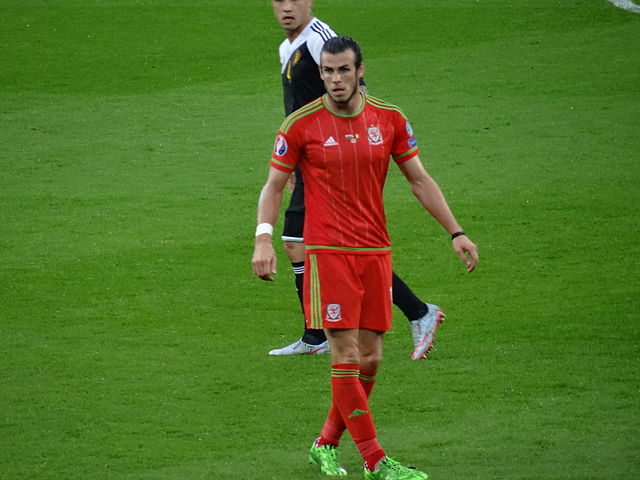
After their exploits in 2016, the novelty seemed to have worn off Rob Page’s Wales as they were dumped out of Euro 2020, and few neutrals would have wanted them to stand in Ukraine’s way of qualifying last week. However, the outpouring of joy seen in the principality at reaching a first World Cup in 64 years was hard not to get swept up in, plus it is difficult not to feel delighted for Gareth Bale, their unreasonably-criticised world class talisman who will get a chance to prove his doubters wrong on the biggest stage – something top talent from so-called smaller nations don’t always get the chance to do.
Canada, meanwhile, didn’t merely sneak into a qualifying spot, they were the number one team from CONCACAF, playing an exciting brand of football under Englishman John Herdman who has Alphonso Davies, Jonathan David and Cyle Larin at his disposal, among others, in a well-balanced team which mixes youth and experience. They only lost twice in qualifying, with one defeat coming after qualification was confirmed, and now have the chance to change the footballing landscape in their country.
The Canadians have a very tough group which contains two of 2018’s top four. They begin Group F against Belgium, then face Croatia, and will hope to still have a chance to progress when they play Morocco. I believe they can cause an upset and take a point against one of the Europeans, and if they can advance with a win against Morocco, I fancy them to do it.
Wales begin their Group B campaign against the United States, then face Iran before a rematch with England. The first game for Wales is key, lose that and they’ll be playing catch-up and Iran are not the easiest side to break down. They won’t want too much riding on the England game.
Argentina
Form going into World Cups is usually to be taken with a pinch of salt, especially when South American sides are concerned. Take Brazil; awful in qualifying by their standards for 2002, but at the finals in Japan & Korea they were unstoppable. Fast forward to 2018, Brazil become a force again after appointing Tite, qualifying at a canter, before a handful of distinctly average displays in Russia.
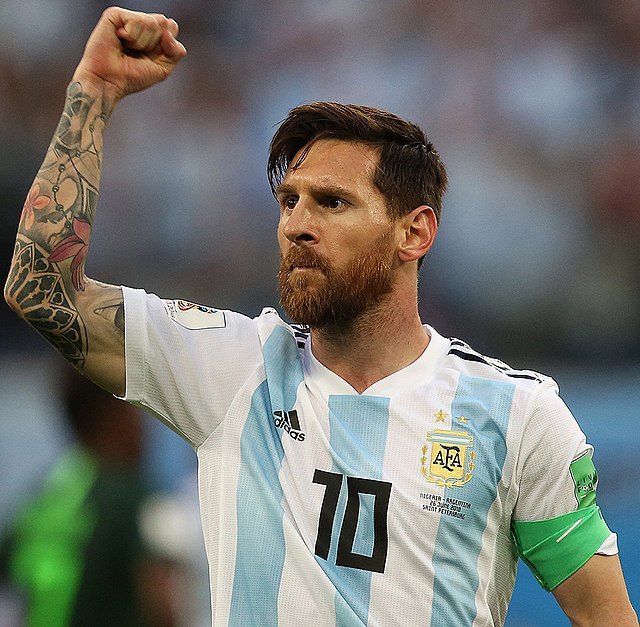
So it is with that caveat that I’m trying not to get too enlivened by their neighbours, Argentina, and the possibility of a fairy tale World Cup victory for Lionel Messi.
Not losing once since the 2019 Copa America, they were therefore unbeaten in qualifying (as were the Brazilians), plus La Albiceleste won their first major trophy with Messi a year ago at the 2021 Copa America, before dismantling Italy in the Finalissima at Wembley a fortnight ago. Italy looked a shadow of their former selves, but Argentina fully deserved the 3-0 win; Messi very much the orchestrator.
With Lautaro Martinez and Angel di Maria in support, Messi is part of a front three which may not be as strong as the best ones he’s lined up in at club level, but it seems to have the most cohesion of all his previous Argentine ones. With Emi Martinez in goal, Lionel Scaloni’s side have filled a position they were clearly lacking in Russia, where they limped through the group stage and then came up short in a classic against France.
There are still question marks surrounding their defence which leads my head to say they won’t go all the way in Qatar, but it’s the World Cup! My heart rules over my head on such occasions, and of the favourites and usual suspects, they are the side I’d love to see lift the trophy.
Argentina shouldn’t face as much pressure to make it through the group this time; they’re in Group C where they begin against Saudi Arabia, then face Mexico and Poland. The latter two have potential to cause problems, but I fancy Argentina to take at least seven points. If things go as expected – which they never do in the World Cup – then they’ll meet France or Denmark in the Last 16.
Ecuador
One of the sides last seen in 2014, I’m excited to see how Gustavo Alfaro’s men get on in Qatar. That is if they are able to compete, with Chile launching a complaint to FIFA, stating that Bryan Castillo was ineligible for the eight qualification matches he took part in. A decision is expected in the coming days.
Presuming they will be at their fourth finals, El Tri will want to build on an impressive CONMEBOL qualification campaign, which despite going in to ranked 64th in the world, ninth of the ten South American sides, they were very much the best of the rest behind Brazil and Argentina, taking points off both and registering a 6-1 win over Colombia and a 4-2 against Uruguay.
They ended up in fourth, behind Uruguay, but were only pipped on the final day, long after already-qualified-Ecuadorian feet had been taken off the gas. With the three former winners the only other South American representatives, Ecuador fit the criteria of those who are on the lookout for something a little different.
Michael Estrada very much impressed me in qualifying, with six goals, plus veteran Enner Valencia’s experience still comes in very handy. Over the June international break they kept three clean sheets in three against Nigeria, Mexico and Cape Verde respectively, which suggests they’re ticking over quite nicely and though many leagues and clubs are represented in the squad – from England to Turkey to Argentina to United States – a real cohesion has developed in that striking yellow and navy kit.
Ecuador will be Qatar’s first opponents on the opening day in Group A; it will be a tough opener against hosts who will be desperate for a strong start. It won’t get any easier, with the Netherlands next up, then the champions of Africa, Senegal, to round things off. In a wide open group, for me, everything rides on that first fixture, but at least history is on Ecuador’s side, as CONMEBOL sides have a great World Cup record against AFC opponents.
A few honourable mentions
Let’s be honest, it’s great to see a rejuvenated Netherlands back at the World Cup. Missing out on Euro 2016 was a shock, but when they registered a big, fat DNQ for Russia 2018 were were starting to miss them. Plagued by constant talk of whether Frank de Boer was the right man for the job at Euro 2020, they were rather hit-and-miss a year ago, but with Louis van Gaal in the dugout again they look almost back to their best, beginning their Nations League campaign with a 4-1 hammering of neighbours Belgium. I can’t wait to see Doha stands bedecked in orange come November.

As for the final two sides to qualify, Costa Rica and Australia, I’m glad they both came through their inter-continental play-offs victorious, for nothing more than the extremely-tenuous reason of… Geography! Every World Cup needs at least one Central American nation who could do anything from crash out of the group without a point, to narrowly miss out on the semi-finals, and Los Ticos are very much the team for that job! As for the Socceroos, despite not being an OFC team for a while now, qualifying regularly is doing wonders for the game in Oceania, so in my opinion, it is always positive to see that corner of the globe represented.
So there you have it, half a dozen or so teams who (for now) I’m wishing well or at least keeping an eye on in the run up to Qatar 2022. I’m sure my own opinions will change a little over the next few months, but either way, despite so much negativity around this year’s event, I’ll be doing my utmost to find as many ways as I can to get excited about it.
Is it time the Grand National was put out to stud?
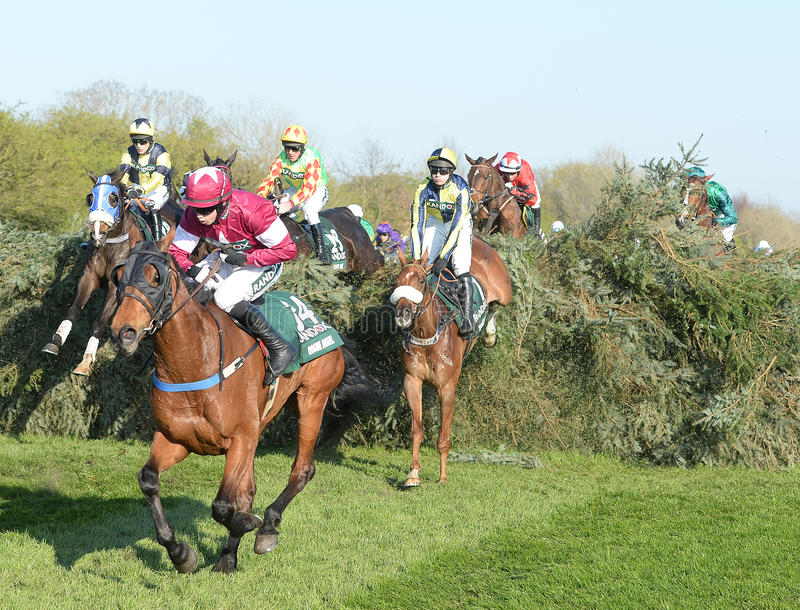
Having put one giant tick next to the final thing on its to-do list last year, the sanitised version of the once incredible race has nothing left to exist for.
I had to remind myself this week of Minella Times’ name. If you’re unaware, that is the name of the horse ridden to victory at last year’s Grand National.
You’d be forgiven for not knowing or simply forgetting the name, because never in the history of the race had the winning horse played second fiddle to its rider, who, as you’ll certainly remember, was Rachael Blackmore, the first woman to win – sorry, ride the winner – of the Aintree showpiece.
Blackmore’s performance was first-class and she clearly is a top jockey, regardless of gender, which she backed up by winning the Cheltenham Gold Cup aboard A Plus Tard last month. As historic a moment it was, no one in racing was so shocked that she would be the one to break the duck.
And break the duck she did, 44 years after Charlotte Brew became the first woman to enter the race, the year of Red Rum’s third triumph which rather stole the show that year. Brew and her horse Barony Fort were about five fences behind when Rummy crossed the line “like a fresh horse in great style”, then refused at the fourth last. If ever a perfect metaphor existed to show the improvement of female jockeys over the decades, one need look no further than Brew and Blackmore’s respective results.
However, a quick comparison between 1977 and 2021 will also highlight how much the race has changed over the years, all in the apparent interests of safety.
The race first caved in to pressure in the late 80’s after equine fatalities at Becher’s Brook, one of which, Brown Trix, died after falling back into the brook and drowning. One could blame the fence, or, one could look at the footage from the 1989 race and watch amateur jockey David Pitcher riding the poor animal like a complete maniac, disaster was inevitable. This led to the brook being filled in for 1990’s running.
Modifications such as stricter entry requirements and widening the course – to allow runners to bypass fences in case of injury or fatality – have clearly been beneficial.
Others, often prompted by reactionary responses to damaging front-page stories the morning after the race, have not; Becher’s has gone full “SJW”, having the landing-side drop reduced and levelled out; other fences have been reduced in height and the wooden cores of the fences have been replaced by softer, plastic alternatives. All to make the race “safer”.
Has all this worked? No. 12 horses died between 1970-89, 17 horses died between 1990-09, and we’re up to 6 so far over this 20-year period. Easier fences mean horses can go faster… speed kills.
The only thing that has changed over my lifetime (I was born in 1990) is the spectacle itself. The often-proclaimed “greatest test of horse and rider” has been continually watered-down (to please those who don’t have any real understanding of the sport) to such an extent that a horse with no previous wins over fences can take the rosette, as proven in 2016 by Rule The World. Great test indeed.
Sceptics watched the back-to-back triumphs of the diminutive Tiger Roll in 2018 and 2019 and questioned whether the race is now nothing but a long-distance run, and how would the same horse have faired if he were running 25 years earlier. I don’t blame them.
I am taking nothing away from Blackmore’s achievement, after all, she beat all the male jockeys for whom the race is also easier than it once was. But now that the “can a woman ever win it?” question has been firmly put to bed, what exactly does the 183-year-old (or 186, depending on who you ask) race have left to achieve, when any achievements will only be sneered at by those comparing with what has gone before.
I won’t be holding out any hope of the race reverting to its pre-1990 state, just imagine the outcry! And with only further safety measures likely to come, perhaps it would be better if we packed up the spruce for the last time and all went home before this downward spiral gets any deeper?
All sport has the power to hit us with narrative after narrative and the National is no different. The stories of Red Rum, Aldaniti and Foinavon among many, many others have been well chronicled. Even this century, we’ve seen Red Marauder win in the bog, Ginger McCain’s triumph with Amberleigh House, AP McCoy’s long-awaited victory and, of course, Tiger Roll.
“That’ll be no different in future!” I hear you cry. Maybe, but with the race a shadow of its former self, is it really worth the pretence?
Football – it’s probably not for you
The greatest sport in the world, ruined over the weekend by many small, but far too noisy, sections of society.

To the mindless fools who broke down security barriers and entered Wembley Stadium without a ticket, injuring and abusing those who had paid a hell of a lot of money to be there in peace – we don’t want you, football is not for you.
To the 49 people arrested by the Metropolitan Police for your disgusting behaviour both pre- and post-match; to those attacking Italian and Danish men, women and CHILDREN for the crime of not being En-ger-lish – we don’t want you, football is not for you.
To the people from all and any corners of the globe who decided an appropriate response to young men missing penalty kicks was to take to social media and give them vile, racist abuse – we don’t want you, football is not for you.
To the person who vandalised the Marcus Rashford mural, you are scum – we don’t want you, football is not for you.
To the politicians of all parties and persuasions who donned replica kits in an attempt at point-scoring, having spent the last year campaigning against and criticising the young men they claim to be behind – we don’t want you, football is not for you.
To those laying the blame for the racist abuse solely at those politicians’ feet, making out that trouble at football has only come about since Brexit or since taking the knee was called “gesture politics”, while conveniently ignoring the decades of hooliganism that don’t fit your agenda – we don’t want you, football is not for you.
To the virtue signallers who posted images highlighting the fact that England players have parents or grandparents born in other countries. Congratulations, you just made it about race. Whether their nans were from Lagos, Limerick or Lowestoft, they are the England team, no different in terms of ethnic diversity than the majority of other Western European international sides, but thanks for focusing on skin colour, rather than shirt colour. We don’t want you, football is not for you.
To those who have called out “football fans” for the appalling scenes on Sunday, just for your information, what you saw were not football fans, and we won’t have our name dragged through the mud again because of a few yobs and chancers. We don’t want you, football is not for you.
To the people who have taken to social media to blame white, cis, men for the thuggery and abuse. Watch the footage of people breaking in and you’ll see a more diverse range of ethnicities than in the England squad. While you’re at it, watch Gareth Southgate’s news conference where he says most of the racist abuse comes from abroad. Also, who are you to assume their sexuality? We don’t want you, football is not for you.
To the A-listers and delegates who can dodge quarantine rules just to be handed tickets that many of us can only dream of getting our low-life paws on – we don’t want you, football is not for you.
To the people who hadn’t watched a football match since England v Croatia 2018 and believe the nonsense opinions they spout on Facebook are in any way relevant, just stop because – we don’t want you, football is not for you. And just piss off.
I wake up every morning thankful that I’m not an England fan. On the whole, this is quite unfair, because genuine England fans are just as passionate about their team as I am about mine, while still being perfectly respectful. They tend to get a bit carried away with things coming home/not coming home and that tinge of arrogance can blur their collective vision on occasion, but generally, they’re proper fans, and that’s why I separate them from the anthem-booing, flare-up-the-arse, bottle-throwing baggage that comes with the Three Lions.
But it’s that same baggage, all too unique to the England team, that will always deter me from wishing them well, no matter how likeable and well-intentioned their players and manager are.
I was in Baku just 10 days ago for the Denmark v Czech Republic match. There were no arrests; bottles remained in hand; backsides were not illuminated; children were not attacked; barriers were not crushed; the flow of alcohol didn’t lead to hostility; twitter barely noticed, neither did Tom Cruise, nor politicians in shirts with labels still attached.
There were just fans… proper football fans.
FIFA woke up and smelled the World Cup coffers
Plans to hold the FIFA World Cup every two years will not only undermine the tournament itself, but the fascination and prestige that make it so special.
April 20th felt like a turning point in modern football. For once, fans, federations and the governing body alike stood side-by-side to banish the European Super League (ESL) before it had really shown its face. “Either you are in, or you are out!” said president Gianni Infantino. A joyous moment for tradition and meritocracy.
But having briefly held “good guys” status within the collective perception of football fans over the 48-hour furore, murmurings of a biennial World Cup have seen FIFA quickly recast as the greedy villains they so often seem to play.
It was announced yesterday on 21st May that FIFA would launch a “feasibility study” into the proposal made by Yasser Al-Misehal, president of the Saudi Arabia Football Federation (SAFF), to host both the men’s and women’s tournaments every two years, despite absolutely no one ever having an issue with (in the men’s case) almost a century of four-year cycles.
Al-Misehal said, “We believe the future of football is at a critical juncture. The many issues that football has faced have now been further exacerbated by the ongoing pandemic.”
Now, I am not fluent in billionaire, but I believe that translates loosely as, “We have been spunking our money up the wall and it is becoming a bit awkward, and this pandemic has meant we have not been able to drain as much money out of loyal fans as we would have liked.”
It feels like we were in a very similar place last month; ESL bigwig Florentino Perez dressing up increased opportunities to vanquish financial fears as something for football as a whole. The biggest difference between the statements from the ESL and SAFF are that FIFA seem keen on listening to the latter, while they would not hear a word from the former.
So, what is making Infantino entertain this “eloquent and detailed” proposal? I would be delighted to hear any reason other than jumping at the chance to double the already huge commercial opportunities offered by the World Cup – I mean, why make $6 billion every four years when you could make it every two? – however, I fear there are none.
Saudi Arabia, who have recently been throwing their wads around in the realms of Formula 1 and heavyweight boxing – and in doing so were much later to the party than some of their neighbours on the gulf – are perhaps intent on getting a slice of that pie by playing host nation, and are trying to double their chances of doing so. Of course, I could be way off the mark, the Saudis may be trying to champion women’s football and want to double the amount of global stagetime available to the Women’s World Cup. You tell me.
The suits all seem blind to the fact, however, that their “product”, steeped in history and honour, has become so incredibly successful partly down to the fact that it only happens once every four years. The anticipation that builds over this time for that rare shot at absolute glory, the passion shown on the pitch and in the stands, and the speed at which the chance can be snatched away simply cannot be replicated by an event that is held more regularly. Most importantly, the global audience’s imagination just will not be captivated when the element of, “Oh well, we’ll have another go soon” is added to the mix.
Every football fan on the planet loves the World Cup. Yet not one has ever seriously suggested holding it more often. That should tell us something.
In other words, quality over quantity. FIFA are thinking of going with option 2, taking a bullet to their uncultured right foot.
Putting emotions to one side, there are more logistical matters to address.
As much as I would love an old-fashioned approach to fixture congestion, I fear the days of eleven men playing 43 times a week on boggy pitches and living on half-time oranges are not coming back. Thus, with an added World Cup and (let’s not forget) the new Club World Cup to fit in, what will make way?
Will continental championships be played less often, delighting UEFA and their counterparts? Will domesic leagues be shortened and cups scrapped, meaning fewer opportunities for the average fan to do what he so loves and support his team? Will the UEFA Champions League have team numbers cut to decrease congestion? Much of this sounds like an ESL owners most beautiful dream.
What of the question of qualification?With space in the calendar at a premium, how does one ensure the 32/48/64/128 (delete as applicable) teams have gone through a rigorous enough process to merit their place? Heaven forbid automatic spots are allocated, à la Rugby Union.
Unfortunately, pre-qualifiers will likely be the order of the day in Europe and South America, denying the minnows their big pay day against the giants, while said giants will be protected from the rough and tumble of regular qualifiers and maybe will have to negotiate a play-off to reach Riyadh 2032. This “haves & have-nots” philosophy could create a tier system, which could only widen if top players seek ways to become eligible for those on the “right” side of the glass ceiling. Again, à la Rugby Union.
The history books will also get a firm kick in the teeth. What will become of Miroslav Klose’s goalscoring, Lothar Matthäus’ appearances and Pele’s victories when the next generation of German or Brazilian talent could comfortably have played in seven World Cups by their 30th birthday? As incredible as Spain’s 2008-2012 dynasty were, they showed how difficult it is to win back-to-back World Cups. It stands to reason that the next similarly dominant side would have three world titles to show for the same period of dominance. Will such an achievement be considered greater than that of Brazil’s ’58 and ’62 triumphs?
The voyage of faith made in 1930 by four European nations to Uruguay set in motion 90+ years of belief and passion for this tournament, which – with the exception of World War Two and its aftermath – has stuck rigidly to a schedule that has allowed our anticipation to reach boiling point before bursting into life before our eyes.
FIFA are considering crushing that. They must be stopped.
 Anthony Tomas Sport